PB&J TV Family
- 4.4
- Rating
- 10.00K
- Installs
- Free
- Price

 Analysis by App-foxy
When I look at PB&J TV Family, I see a parenting app built around one clear idea: family webcasting. That focus matters because it is different from the usual parenting tools that mainly track routines, share calendars, or provide advice. Here, the appeal is the possibility of bringing family members into a shared viewing or communication experience through a mobile device.
I approached it less like a general entertainment platform and more like a small family connection tool. That distinction helped me understand where it can be useful and where expectations need to stay realistic. It is free, rated for Everyone, and comes from Peanut Butter and Jelly TV, so the basic invitation is easy to understand: families can try it without making a purchase decision first.
The app belongs in the parenting category, but its usefulness depends heavily on the people around you. A parent who wants a structured way to involve relatives in a child’s everyday moments may find the concept appealing. Someone looking for a full video library, a detailed child-safety dashboard, or a replacement for a mainstream video-call service may feel that it is too specialized.
You May Also Like

 Blood Strike: 2.5 Anniversary
Blood Strike’s Loadouts Turn Every Drop Into a Tactical Gamble
A close look at Blood Strike’s custom loadouts: how fast access to signature weapons reshapes its battle royale rhythm, rewards preparation, and narrows the gap between fights.

 Pandora - Music & Podcasts
Pandora’s Music Is Easy to Start, but Harder to Recover
Pandora’s strength is its low-effort path from a seed to a station. Its weak spot is how much confidence it asks you to place in connection, setup, and quiet recovery.

 8 Ball Pool
 Is Built on Rivalries, Rematches, and Routine
A close look at the rivalries, rematches, shared routines, and unanswered safety questions that turn a quick pool match into a persistent mobile community.

 Samsung Music
’s Quiet Strength Is Playing What You Already Own
Its reach comes less from spectacle than from dependable access to a personal library. That simplicity is both the app’s strongest retention engine and its ceiling.

 AccuWeather: Weather Radar
AccuWeather Review: A Quick, Clear Forecast for Everyday Decisions
For everyday plans, the best forecast is the one you can understand quickly. AccuWeather makes rain timing, radar, and local conditions easy to act on, with a few trade-offs.

 Hill Climb Racing
Why Hill Climb Racing Still Turns Crashes Into One More Run
A tiny car, a bumpy hill and one more upgrade: Hill Climb Racing keeps resurfacing because its simple chaos makes every near-miss feel personal.
More From Our News Desk
View All News


Family webcasting is the feature that defines the experience
The central capability is not simply watching something on a phone. It is the family-webcasting idea: using the app as a bridge between a child’s household and other people who matter to that family. In practical terms, the value comes from making a shared family moment possible even when everyone is not in the same place.
That can change the role of a mobile app. Instead of opening it only when you need information, you use it around a particular social purpose. A parent may want to include a grandparent, an absent parent, or another trusted relative in a small event that would otherwise be missed. The app’s strongest quality is therefore not complexity; it is its narrow focus on connection.
I also appreciate that the idea is easier to explain to a family than a large collection of unrelated tools. You do not need to sell it as a complete parenting system. You can describe it as a way to bring family members into a webcast-style experience. That clarity is useful, especially for relatives who are comfortable with phones but do not want to learn a complicated platform.
There is an important trade-off in that simplicity. A focused app can feel approachable, but it may not satisfy people who expect extensive controls, multiple communication formats, or a broad catalog of child-oriented content. The more your needs move toward scheduling, messaging, storage, or formal remote learning, the more likely a general-purpose service will seem more practical.
What the capability changes for parents
The real effect of family webcasting is emotional and logistical rather than technical. It can reduce the distance between a child and relatives who cannot attend in person. A short family moment becomes something that can be shared deliberately instead of described later through a message.
That is especially relevant for families spread across different homes. A parent may already use ordinary video calls, but a dedicated family app can make the activity feel more intentional. Rather than opening a call for an unplanned conversation, the family can treat the webcast as a small event: a story, a performance, a craft session, or a simple update from the child.
I would not describe this as a replacement for face-to-face time. It works best as a supplement. A screen cannot reproduce the ease of being in the same room, and the quality of the experience still depends on everyone joining at a suitable moment. What the app can do is make remote participation feel more organized and family-centered.
One less obvious advantage is that the concept can encourage a parent to think about the audience before starting. That sounds minor, but it changes how a family shares. Instead of casually broadcasting everything, you can decide which moments are worth inviting others into. For young children, that may help keep the activity short and purposeful rather than turning the phone into constant background entertainment.
How I would use it in everyday life
In a realistic household, I would use PB&J TV Family for a planned moment rather than leave it open throughout the day. For example, a child could prepare a short drawing or show a relative a new reading exercise while that relative watches remotely. The parent can set up the phone, explain what is happening, and keep the child’s attention on the activity instead of on the app itself.
The best workflow is to decide the purpose first, then choose the people who need to be involved, and only afterward begin the webcast. That order prevents the technology from taking over the moment. It also makes the experience easier for relatives who may be joining from a phone and need a simple invitation rather than a long explanation.
I would keep the first sessions brief. A young child may enjoy being the center of attention for a few minutes but lose interest if the event becomes a formal production. Short sessions also make it easier to discover whether the family actually enjoys this format. If the relative wants a longer conversation afterward, that can happen separately through the communication method the family already prefers.
Another useful habit is to prepare the physical setting before opening the app. A stable phone position, a quiet corner, and enough light can make more difference than repeatedly adjusting the software. Since the purpose is family participation, the child should remain visible and audible without needing to hold the device constantly. This is a practical point that a short store description would not tell you, but it has a direct effect on whether the webcast feels relaxed or frustrating.
I would also agree on a simple ending signal with the child. When the activity is finished, stop rather than stretching the session just because relatives are still watching. That protects the child’s routine and keeps the app associated with positive, manageable interactions.
The strongest scenario: including relatives in a child’s small milestones
The clearest use case is a family with relatives who want to stay involved but cannot regularly visit. Imagine a child preparing a short home performance. One parent can arrange the phone, invite the chosen family members, and let the child share the moment without requiring everyone to travel or coordinate a large gathering.
This scenario works because the webcast has a specific purpose. The child knows what to do, the relatives know why they are joining, and the parent can finish the session when the activity is over. It is not trying to be an all-day communication channel. It is a lightweight way to make a small event feel shared.
The same approach could suit a bedtime story shared with a grandparent, a show-and-tell moment, or a family greeting during a period when visits are difficult. I would be careful with anything that exposes more of a child’s daily life than necessary. The strongest use is selective and deliberate: share a defined moment with trusted people, then close the session.
For separated households, the idea may also be useful when a parent wants a child to share an activity with another family member at a planned time. However, it should not be treated as a substitute for agreed parenting communication or as a solution to complicated family arrangements. The app can support a moment; it cannot resolve the responsibilities and boundaries around that moment.
There is a subtle benefit for children, too. When relatives attend a small presentation or activity, the child may feel that their effort matters beyond the immediate household. That can be encouraging, but parents should keep the tone playful. Turning every drawing or reading exercise into a performance can create pressure, especially for a shy child.
What the day-to-day experience asks from you
Because this is a webcast-centered tool, the parent remains part of the process. I would not hand it to a young child and assume the child can manage the whole experience independently. An adult may need to choose the setting, help with the device, coordinate the viewers, and decide when the session should end.
That involvement is not necessarily a weakness. In a family app, adult guidance is often what makes the experience appropriate. Still, it means the app is less suitable for parents searching for a completely automatic activity that occupies a child without supervision.
It is also worth separating the app’s role from that of ordinary video calls. A general video-call service may be better when the main need is two-way conversation, spontaneous contact, or a long discussion between adults. PB&J TV Family makes more sense when the family wants a webcast-like format centered on a child’s shared moment.
Likewise, a streaming service is a better fit for on-demand entertainment. If your goal is to find cartoons, films, or educational videos for a child to watch alone, this app’s family-connection angle is not the same thing. The distinction is important because the word “TV” can create expectations of a content library, while the useful idea here is the family webcast itself.
Trade-offs I noticed before recommending it
The first trade-off is focus versus breadth. The narrow family-webcasting concept is easy to understand, but it does not automatically cover every parenting need. Parents who want one app for calendars, behavior notes, household planning, educational resources, and communication will probably prefer a broader toolset.
The second is coordination. A webcast is only valuable when the intended family members can take part. If relatives have different schedules, limited interest in installing another app, or difficulty following mobile instructions, the experience may take more preparation than a familiar messaging or calling service.
The third is attention. Any screen-based family activity can become distracting if it runs too long. I would use this app with a clear beginning and end, especially with younger children. The technology should support the child’s activity, not replace play, conversation, or rest.
There is also a privacy judgment involved in any family broadcasting tool. I would keep participation limited to people the parent knows and trusts, avoid treating the app as a public stage, and think carefully about what appears in the background. Those are sensible habits for any child-related webcast, regardless of how convenient the app feels.
Another limitation is that a dedicated app may not be the right answer for a family that already has a smooth routine with a familiar service. If everyone is comfortable using an existing video-call platform and the only requirement is occasional conversation, adding a separate app may introduce unnecessary friction. PB&J TV Family earns its place when the family-webcasting format itself is useful, not merely because it is another way to open a camera.
Who is most likely to gain from it
I think the best audience is parents who want to create intentional remote family moments. That includes households with grandparents or other relatives living far away, families managing busy schedules, and parents who want a simple format for sharing a child’s small activities with trusted people.
It may also suit families that prefer a child-centered interaction rather than an adult conversation happening around the child. A planned webcast gives the child a clear role, whether that is showing something, telling a short story, or greeting relatives. The parent still guides the session, but the child’s activity remains the reason everyone is there.
I would be less likely to recommend it to someone seeking independent child entertainment, advanced parenting records, or a comprehensive communication suite. It is also not my first choice for families that dislike scheduled digital activities or whose relatives are unlikely to use a separate family platform.
The app’s audience size gives some context without changing that judgment. It has passed ten thousand installs and holds a 4.4 average from around five hundred ratings, with more than a hundred written reviews. Those figures suggest that it has found a real audience, but they do not remove the need to match the app’s specific purpose to your family’s habits.
Compatibility, cost, and what to expect
PB&J TV Family is free, which makes experimentation straightforward. Parents can see whether relatives enjoy the format without committing money first. That is particularly useful for a family tool whose value depends on shared participation rather than on one person using it alone.
The app is rated Everyone, so its presentation is intended for a broad audience. Even so, an Everyone rating should not be confused with a recommendation for unsupervised use by every child. The parent still decides who participates, what is shared, and how long the device remains active.
The current version is 2.4 and it requires Android 8.0 or newer. That makes the first practical question simple: check the Android version on the device you plan to use, especially if it is an older phone kept for family activities. Compatibility is not an exciting feature, but it can determine whether the app fits your household at all.
The app was released in January 2017, and I would approach it with the mindset appropriate for a focused family utility rather than a constantly expanding social platform. My recommendation is to test one small, private family session first. If the setup feels natural and relatives respond well, it may become a useful part of your routine. If the family immediately falls back to a familiar calling app, that is a sign that the webcast-specific format is not adding enough value.
My final view after using it as a family tool
What I like most about PB&J TV Family is that its main idea has a human purpose. It is not trying to solve every parenting problem. It is aimed at helping a family share a child-centered moment across distance, and that can be genuinely meaningful when used with intention.
Its limitations come from the same place as its strength. A focused webcast app will not replace a video library, a family organizer, or a full communication service. It also asks parents to coordinate the session and protect the child’s attention and privacy. Those are reasonable responsibilities, but they mean the app is not a hands-off solution.
For my recommendation, I would suggest it to a family that wants a free, simple experiment in remote participation and already has trusted relatives willing to join. I would skip it if the real need is ordinary calling, on-demand children’s content, or detailed parenting management. Used for the right purpose, however, PB&J TV Family can turn a small activity into a shared family occasion, and that is a more specific and useful promise than its short name might suggest.
FAQs for PB&J TV Family
01What is PB&J TV Family?
PB&J TV Family is an innovative app designed for parents to stay connected with their children’s daycare or preschool. It provides live streaming video feeds, allowing parents to watch their children in real-time throughout the day, ensuring peace of mind and transparency.
02How do I set up my PB&J TV Family account?
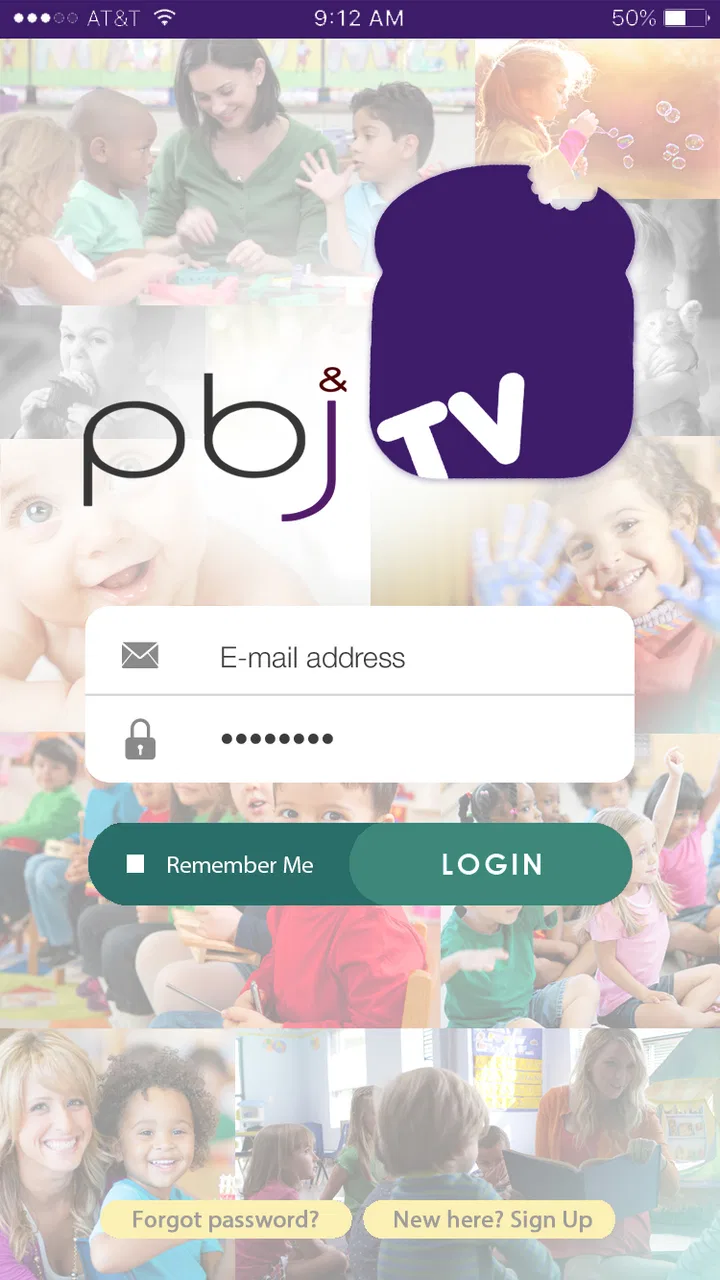
Setting up your PB&J TV Family account is straightforward. After downloading the app, you'll need a unique code provided by your child's daycare. Enter this code during registration, then follow the prompts to create a secure account using your email and a password.
03Is PB&J TV Family secure and private?
Yes, PB&J TV Family prioritizes security and privacy. The app uses encrypted video streams to ensure that only authorized users can access the feeds. Additionally, users must log in with a secure password, and only parents or guardians approved by the daycare can view the streams.
04Can I watch the video feeds on multiple devices?
Yes, PB&J TV Family supports multiple devices. Parents can log in to their account from any smartphone, tablet, or computer, allowing flexibility in how you choose to stay connected with your child’s activities at daycare.
05What if I encounter issues with the live stream?
If you experience issues with the live stream, first check your internet connection, as a stable network is crucial for quality streaming. If problems persist, consult the app’s help section or contact customer support for troubleshooting assistance.
Pros
- User-friendly interface
- easy to navigate.
- High-quality video streaming
- minimal lag.
- Extensive library of family-friendly content.
- Parental controls for safe viewing.
- Regular updates with new features.
Cons
- Limited offline download options.
- Requires a stable internet connection.
- Subscription model can be pricey.
- Occasional ads in free version.
- Not all content is available in all regions.

PB&J TV Family
Gallery